1. 感知姿勢 The Sensing Position
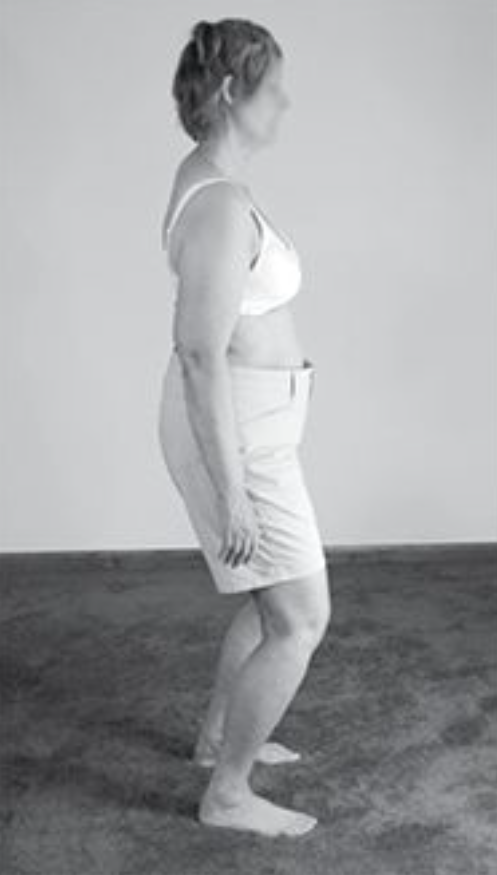
治療師要求個案的雙腳平行分開,約與肩同寬。他明顯彎曲膝蓋,讓手臂和雙手以放鬆的方式自然垂下。他的頭部保持正直且放鬆。他將骨盆向後並向下旋轉(即骨盆後傾)。他的上半身保持正直,同樣處於放鬆的狀態。他張開嘴巴,同時用鼻子和嘴巴緩慢地深呼吸。
這個姿勢,藉由深呼吸的輔助,能夠最大化個體對其內在體驗的覺察,並強化伴隨的情緒。這個姿勢的效果還會提高早期、潛意識經驗進入意識的準備度,因為記憶正在被動員或加強。
我經常運用這個姿勢來開啟治療療程中基於身體工作的部分。這個姿勢也可在連續身體體驗的前後實施,使患者的注意力聚焦於剛完成的身體工作所產生的身心影響。患者可以透過比較起始感知姿勢與結束感知姿勢的體驗差異,來掌握這段治療過程帶來的具體成效。
The patient is asked to parallel his feet about a shoulder width apart. He bends his knees noticeably, and lets his arms and hands hang down in a relaxed manner. His head is held upright and relaxed. He rotates his pelvis backwards and under. His upper body is upright, also in a relaxed position. He breathes deeply from his nose and mouth slowly, while his mouth is held open.
This position, aided by deep breathing, maximizes the person’s awareness of his inner experience and intensifies attendant emotions. The effects of this position also increase the readiness of earlier, unconscious experiences to come into consciousness because the memories are being mobilized or strengthened.
I often use this posture to initiate the body-based part of the therapy session. This position may also be used before and after a run of body experiences to bring the patient’s attention to the somatic and psychological impact of the bodywork just completed. The patient can do a comparison of what he
experiences between the starting Sensing Position and the finishing Sensing Position to capture the impact of the work he has done.
2. 後彎弓式與前彎拱式 Backward Bow and Forward Arch
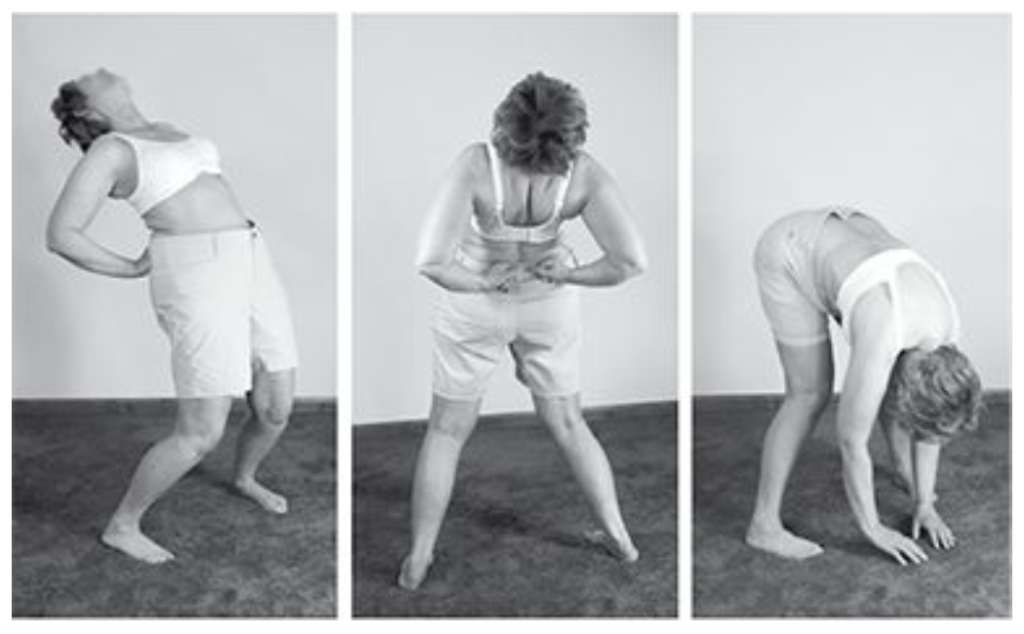
在此練習中,患者被要求雙腳分開與肩同寬,腳跟向外傾斜。接著握雙拳置於後腰處,以垂直方向將拳頭壓入背部。透過這個動作將身體中段向前推展,同時將頭部向後仰,使身體中段形成持續前拱的弧線。練習時需張開嘴部,以口鼻同步進行深長呼吸,並透過手肘向內夾擠的方式打開胸腔。從側面觀看,身體形似被無形弓弦拉開的彎弓。
當患者在此姿勢感到疲勞時,可直接轉換為前彎拱式。此時將拳頭移開背部,手指伸展,手臂以弧形軌跡向上再向前劃動,最後指尖輕觸腳前地面。頭部完全放鬆下垂,呈現倒置垂直狀態。同樣保持口部張開,以口鼻進行深長呼吸,腳跟維持外斜姿勢。
這種壓力姿勢 stress position 強度較高,相比感知姿勢 sensing position 更能激發並深化情緒感受。被遺忘與壓抑的思維會湧入意識層面。有時患者會從這個姿勢自然進入動作爆發狀態,當動作完成時,積累的能量負荷便隨之減弱。在此壓力姿勢中浮現的體驗,往往能開啟並推動後續的身體療程,促成觸碰治療 touch work 與自發性動作 spontaneous movement 的發生。
壓力姿勢可能引起疼痛,尤其對身體武裝 armor 較重者。患者應學習順應自身極限漸進推進,而非強行突破。若出現逃避反應,治療師會鼓勵其維持更長時間或重複練習。隨著治療進展,患者的手臂、腿部與軀幹肌肉會逐漸放鬆,身體開始出現顫動。這種顫動標誌著能量流動較練習前更為充沛通暢。
透過連續伸展與壓縮那些承載潛意識情緒與早期經驗的肌肉群,壓力姿勢能有效減輕身體武裝。這種交替進行的肌肉拉伸與壓縮過程,共同促進了去武裝化 de-armoring 與身心療癒。
接下來的側向擺動 side to side movement 與側向壓力練習 stress exercise,將比後彎弓式與前彎拱式具有更強烈的接地 grounding 效果。若患者缺乏接地感,治療師可在其從後彎前拱練習獲得主要效益後,接續安排側向壓力姿勢的訓練。
Here the patient is asked to move his feet so they are shoulder width apart, then to slant his heels out. He is told to make two fists and place them on his back, waist-high. The fists are placed vertically and he pushes them into his back. In this way he pushes the middle of his body forward. He leans his head back, which continues arching the middle of his body forward. He is asked to open his mouth and breathe through his nose and mouth, breathing deeply and slowly. He is asked to open his chest by pushing his elbows together. From the side, his body looks like a bow that is curved by pulling on an imagined string.
When the patient tires in this position, he moves directly into the Forward Arch. The person is told to remove his fists from his back. He extends his fingers and moves his hands and arms in an upward arc and then forward. Then his fingertips touch the floor lightly in front of his feet. He lets his head go forward so that it is relaxed in an upside down, vertical position.
Again, he opens his mouth and breathes deeply and slowly through his mouth and nose. His heels remain slanted out.
This stress position is intense. It often stirs up feelings and deepens them much more than the Sensing Position does. Forgotten and repressed thoughts are thrust into consciousness. Sometimes, from this position, the patient is thrust into action, which eventuates in a reduction of the increased energy charge when the action is completed. What emerges in the patient during this stress position may initiate and stimulate the rest of the body session, where touch work and spontaneous movement may occur.
Stress positions can be painful, especially if the person is heavily armored. He is told to lean into his limits, not to try to abruptly break through them. If he appears to take flight from this work, he is encouraged to stay longer or he is told to do the positions again. Eventually, in the therapy, the muscles of his arms, legs and trunk relax, and his body starts to vibrate. The vibration indicates that the person’s energy flows more fully and freely than before these exercises were done. Doing the stress positions decrease the person’s armoring by consecutively stretching and compressing the muscles of the body that contain unconscious emotions and early experiences. This sequential stretching and compression of muscles fosters de-armoring and the healing of the person.
3. 側向擺動與側向壓力姿勢 The Side to Side Movement and Stress Position
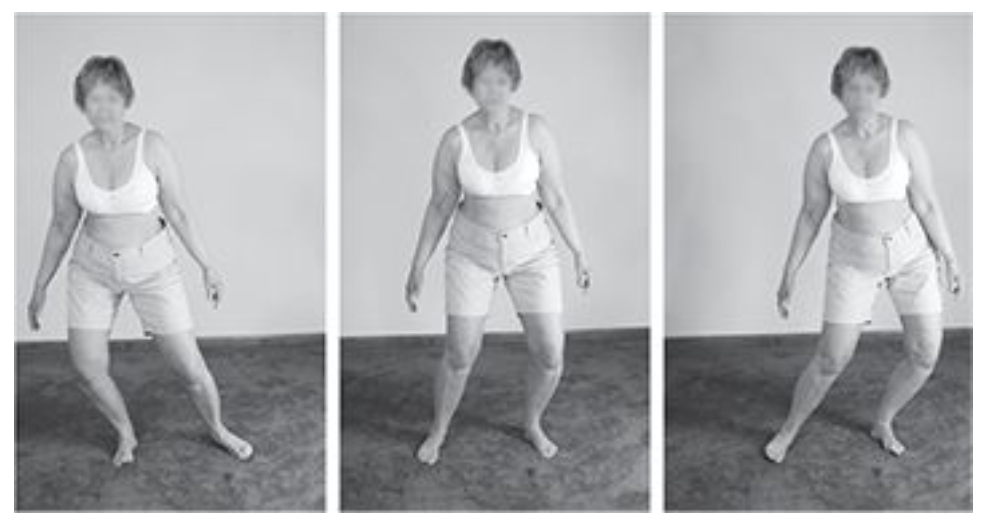
患者需雙腳平行站立,間距略大於肩寬,膝蓋深度彎曲。隨後以平行於地面的弧線軌跡,將膝蓋向左右兩側移動。在動作極限時,雙腳會分別呈現外側邊緣與內側邊緣著地的狀態,此動作稱為側向擺動 Side-to-Side Movement。
當足部充分放鬆後,患者需在動作極限處靜止維持至感到疲勞,此即側向壓力姿勢 Side-to-Side Stress Position。隨後通過抖動雙腿進行放鬆。回到雙腳平行姿勢後,再次彎曲膝蓋進行水平弧線運動,並在另一側維持靜止姿勢。當足部與腿部感到疲勞時即完成該側訓練,至此結束側向壓力姿勢練習。
相比後彎弓式 Backward Bow 與前彎拱式 Forward Arch,此壓力姿勢具有更強烈的接地 grounding 效果。在治療早期便會引入壓力訓練 stress work,因為後續的深度治療需要穩固的接地基礎。該訓練通常安排在療程初期,因其能自然引發那些臨近意識層面的潛意識體驗,這些湧現的經驗將在後續療程中持續探索。
The patient is asked to stand with his feet parallel, a little more than a foot apart. He is asked to let his knees bend deeply. Then he moves his knees horizontally to the floor in an arc from one side to the other. His legs move so that at the extremes he is on the sides of his two feet. One foot is on the outside edge, while the other foot is on the inside edge. This movement is called the Side-to-Side movement.
After the patient’s feet loosen up, he is asked to stop the movement at one extreme and hold it until he is fatigued; this is the side-to side stress position. The patient shakes his two legs out to relax them. Then he is asked to go back to the position with his feet parallel. He bends his knees again. Once more he moves his knees in an arc that is horizontal to the floor. He is asked to move to the other side and to hold this position. The stress position ends when his feet and legs tire. This ends the Side-to-Side Stress Position.
This stress position is more intensely grounding than the Backward Bow and the Forward Arch. Stress work is initiated early in the therapy, because grounding is required to do the intense work of therapy. Stress work is done early in a session because it may spontaneously elicit experiences that are not conscious but are close to awareness. And these experiences are explored during the rest of the session.
Leave a Reply